
Thermal Paper Rolls
Showing all 4 resultsSorted by latest
Understanding thermal paper — and choosing the right one
How thermal printing works
Thermal paper consists of three layers: base paper, coating and protective layer. The print head heats points of the coating, and the colour particles it contains react and become visible. No ribbon, no ink, no toner — in return, the paper is sensitive to light, heat and moisture.
Three material grades
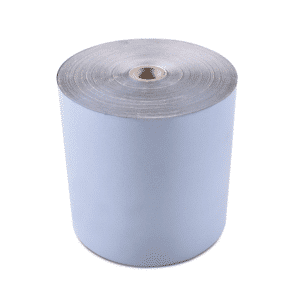
BPA-free is our standard. Since 2020, manufacturers in the EU have in any case only been permitted to offer thermal paper containing a maximum of 0.02% BPA by weight. Phenol-free is the next level; stored correctly, these receipts remain legible for more than ten years. Blue4est works without chemical colour developers, can be disposed of with standard waste paper and can therefore also be used without concern in food retail, organic shops and bakeries.
How long does a receipt remain legible?
On average five to seven years. Phenol-free paper can remain legible for more than ten years if stored correctly, Blue4est for up to 35 years. Storage is decisive: in the dark, at around 20 °C and 40 to 60% humidity. Light causes thermal paper to fade.
Formats
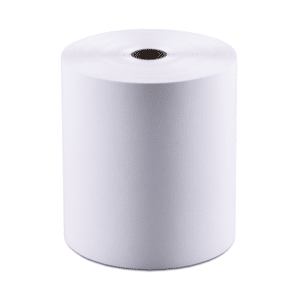
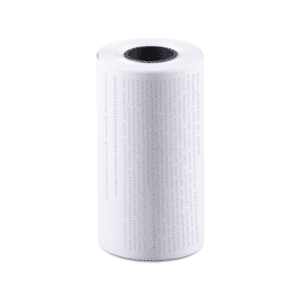
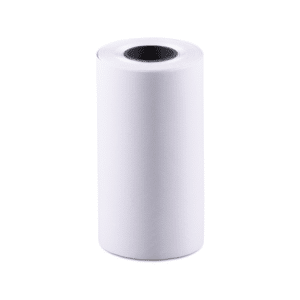
Common widths are 57 mm and 80 mm with a core diameter of 12 mm, with roll lengths from 10 m. We manufacture further widths, lengths and paper qualities on request. You can find out which width belongs to which device under Cash Register Rolls.
Frequently asked questions
Is your thermal paper BPA-free?
Yes, as standard. Phenol-free and Blue4est are available as higher grades.
How should I store thermal paper rolls?
In the dark, at around 20 °C and 40 to 60% humidity.
Which devices use thermal paper rolls?
Card readers, cash registers, mobile handheld scanners, ATMs, POS terminals, label printers and ticket machines.
Can I get special formats?
Yes. We supply standard rolls from stock, and all other sizes and paper qualities on request.
Business partners





Blue Angel ecolabel
